
Buying second-hand can save you thousands of euros — but only if the car is as healthy as the seller claims. Knowing how to inspect a used car before you sign anything is the single best protection against hidden accident damage, worn mechanicals and odometer fraud. This used car buying checklist walks you through every step: what to prepare, what to check on the bodywork, under the hood, inside the cabin, during the test drive and in the paperwork, plus the red flags that should make you walk away.
Why a Thorough Used Car Inspection Matters
The European used car market moves tens of millions of vehicles every year, and the price gap between a good and a bad example of the same model can easily reach 30%. A methodical inspection takes 45 to 60 minutes. Compare that with the cost of a slipping automatic gearbox (2,000 € and up), a failing diesel particulate filter (1,000–2,000 €) or corroded structural members that no repair can truly fix. One hour of attention is the cheapest insurance you will ever buy.
If you are still deciding which model to target, start with our French-language guide acheter une voiture occasion fiable, which ranks the most dependable used models, then come back to this checklist for the physical inspection itself.
Before You Visit: Prepare Like a Professional
A good inspection starts before you ever see the car. Set yourself up properly:
- Insist on a cold engine. Ask the seller not to start the car before you arrive. A pre-warmed engine can mask hard-start problems, smoke and noisy hydraulic lifters.
- View the car in daylight and dry weather. Rain and street lighting hide paint defects, dents and mismatched panels remarkably well.
- Bring a flashlight, a magnet and a microfiber cloth. A small magnet (or paint-thickness gauge) reveals body filler under repainted panels.
- Bring an OBD2 scanner if you can. A 20 € Bluetooth dongle reads fault codes and shows whether codes were recently cleared — a classic pre-sale trick.
- Check the market price first. Knowing the fair value of the exact model, engine and year gives you negotiating power when defects appear.
Exterior Inspection: Bodywork, Tires and Glass
Bodywork and paint
Walk around the car slowly, crouching to look along each flank against the light. Panels should reflect evenly; ripples betray filler. Check that panel gaps are consistent — a hood or door sitting unevenly often means the car has been pulled straight after a crash. Open the doors, hood and trunk and inspect the inner seams and bolts: paint overspray on rubber seals or tool marks on bolt heads indicate panel replacement. Finally, inspect wheel arches, sills and the underside of the trunk floor for rust bubbles or fresh underseal hiding corrosion.
Tires and wheels
Tires tell stories. All four should be the same brand and have even wear across the tread. Wear on one shoulder suggests alignment or suspension issues; cupped or scalloped wear points to tired dampers. The legal minimum tread depth in most of Europe is 1.6 mm, but anything under 3 mm means a 400–800 € expense soon — use it in negotiation. Check the date code (DOT) on the sidewall: tires older than six years should be replaced regardless of tread.
Glass, lights and trim
Look for windshield chips in the driver’s field of vision (a contrôle technique failure point in France), fogged or cracked headlight units, and mismatched glass markings — one window with a different manufacturer stamp than the others usually means breakage or accident repair.
Under the Hood: Engine Bay Checks
Fluids first
Pull the oil dipstick: the level should be correct and the oil translucent brown, not jet black sludge or — worse — milky (a sign of head-gasket failure). Open the coolant reservoir only when cold: the liquid should be clean and brightly colored, never rusty or oily. Brake fluid should be pale yellow; dark fluid means neglected maintenance.
Leaks, belts and battery
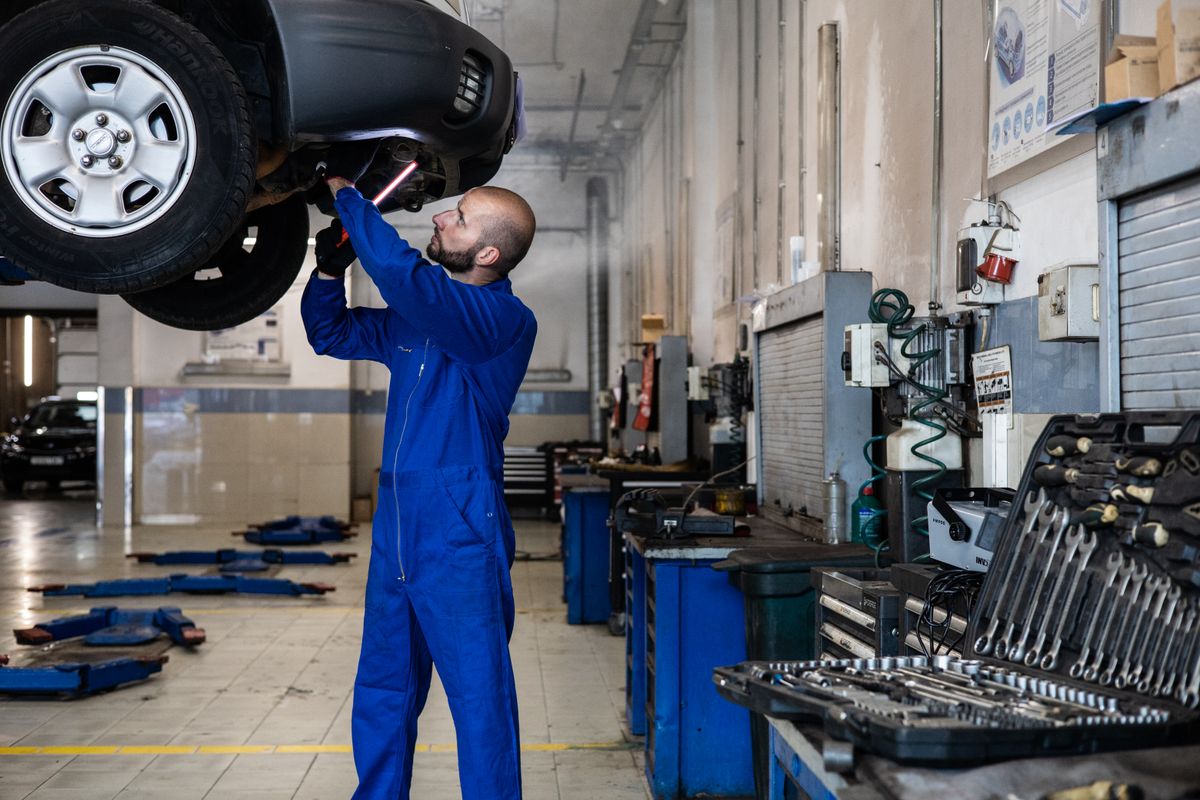
Use your flashlight to scan the engine block, gearbox bell housing and the ground under the car for oil traces. Squeeze visible coolant hoses (cold!) — they should be firm, not spongy. A suspiciously spotless, freshly degreased engine bay can itself be a red flag: sellers rarely steam-clean an engine without a reason. Check the battery terminals for corrosion and look for a date label; a battery over five years old is living on borrowed time.
Start-up test
Now start the cold engine yourself. It should fire within a second or two and settle into a smooth idle. Watch the exhaust: blue smoke means burning oil, white smoke that persists after warm-up suggests coolant entering the cylinders, and black smoke indicates fuelling problems. Listen for rattles in the first seconds — on many engines this is the timing chain talking.
Interior, Electronics and Mileage Consistency
Inside the car, test absolutely everything that has a button: windows, mirrors, air conditioning (it must blow genuinely cold), heated seats, infotainment, every speaker, all lights and wipers. Electrical gremlins are notoriously expensive to chase on modern cars.
Then play detective on the mileage. A 90,000 km car should not have a steering wheel polished smooth, a sagging driver’s seat bolster, or brake and clutch pedals worn to bare metal — those belong to a 250,000 km car. Compare what you see with the odometer and with mileage entries in the service records. With the ignition on, confirm that every warning light (engine, airbag, ABS) illuminates and then goes out; a bulb that never lights up may have been removed to hide a fault.
The Test Drive: 20 Minutes Minimum
Never buy a car you have not driven on varied roads — town, open road and ideally motorway. During the drive, check:
- Steering: the car should track straight with your hands relaxed on the wheel; pulling to one side means alignment or accident geometry issues.
- Brakes: firm pedal, no judder through the wheel (warped discs), no pulling, and a handbrake that holds on a slope.
- Gearbox: a manual should shift without crunching; an automatic should change smoothly without flaring or thumping between gears.
- Clutch: accelerate hard in a high gear at low revs — if revs rise faster than speed, the clutch is slipping.
- Suspension: listen for clonks over speed bumps and feel for floaty, uncontrolled body movement after bumps.
- Engine under load: full-throttle acceleration should be smooth, with no hesitation, smoke or flashing warning lights.
Paperwork and History: The Final Filter
A car that passes every physical check can still be a trap on paper. In France and most of Europe, verify the registration certificate matches the seller’s ID and the VIN stamped on the car (check it at the base of the windshield and on the door pillar). Ask for the full service history and cross-check stamps, invoices and mileage entries. In France, request the free HistoVec report and the latest contrôle technique — it is mandatory for any sale of a car over four years old and lists every defect found. Walk away from any seller who cannot produce these documents on the spot.
Quick Reference: Used Car Inspection Checklist
| Area | What to Check | Walk-Away Red Flag |
|---|---|---|
| Bodywork | Panel gaps, paint match, rust in sills and arches | Structural rust, evidence of poorly repaired crash |
| Tires | Even wear, matching brands, tread above 3 mm, age | Severe uneven wear (hidden suspension damage) |
| Engine bay | Oil and coolant condition, leaks, belts, battery | Milky oil or mayonnaise under the filler cap |
| Start-up | Cold start, smooth idle, exhaust smoke color | Persistent blue or white smoke |
| Interior | All electronics, wear consistent with mileage | Wear that contradicts the odometer |
| Test drive | Steering, brakes, gearbox, clutch, suspension | Slipping clutch or thumping automatic gearbox |
| Paperwork | VIN match, service history, contrôle technique, HistoVec | Missing documents or mileage inconsistencies |
When to Pay for a Professional Inspection
If the car passes your own checklist and costs more than 8,000–10,000 €, a pre-purchase inspection by an independent garage (typically 80–150 €) is money well spent. A professional will put the car on a lift, measure paint thickness, read all electronic modules and give you a written report — which is also a powerful negotiation document. Honest sellers accept this readily; refusal is itself an answer.
For more buying advice, comparison tests and market guides, browse the GuidCar blog or learn more about our editorial team.
FAQ: Inspecting a Used Car
How long does it take to inspect a used car properly?
Plan for 45 to 60 minutes on site: about 15 minutes on the exterior, 10 under the hood, 10 in the cabin and at least 20 minutes of test driving on mixed roads. Add 15 minutes for checking documents. Rushing is exactly what dishonest sellers count on.
Can I inspect a used car myself or do I need a mechanic?
You can perform 80% of meaningful checks yourself with this checklist, a flashlight and a test drive. For expensive cars, complex German premium models or any car you have doubts about, an 80–150 € professional pre-purchase inspection is worth it — it can reveal hidden accident repairs and electronic faults that no visual check will catch.
What is the biggest red flag when buying a used car?
Inconsistent mileage evidence: a worn steering wheel, pedals and seat that do not match a low odometer reading, or service records with gaps and conflicting figures. Odometer fraud remains common in Europe, and unlike a worn clutch, a clocked car is a fraud you cannot repair.
Should the engine be cold when I arrive to inspect the car?
Yes — always ask the seller not to start the engine before you arrive. Cold starts expose problems a warm engine hides: difficult starting, smoke at start-up, noisy timing chains and rough idle. If the hood is warm when you arrive despite your request, treat it as a deliberate red flag.